
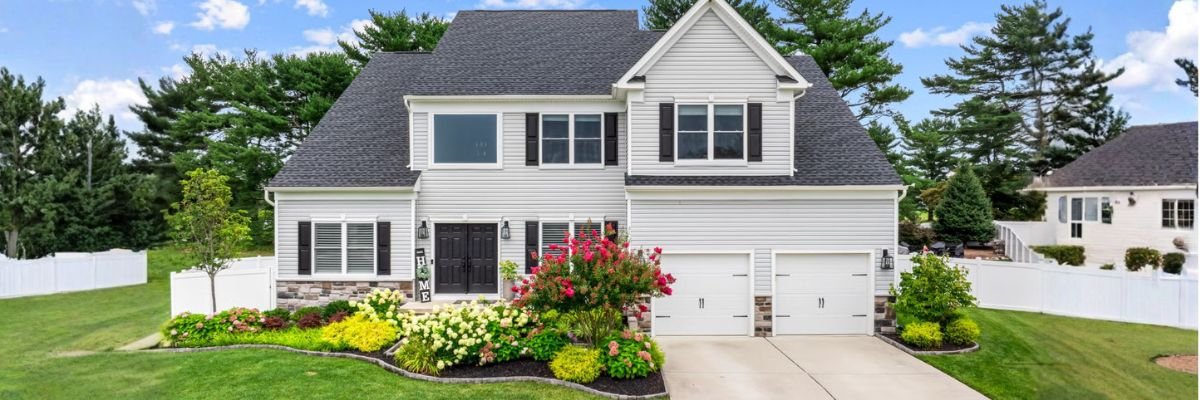
Buying a home in New Jersey is one of the biggest financial decisions you’ll ever make — and in 2026, the stakes feel higher than ever. With a statewide median home price hovering around $539,400, mortgage rates fluctuating between 6.1% and 6.5%, and some of the highest property taxes in the nation, figuring out how much home you can actually afford in New Jersey requires more than a quick Google search.
This guide breaks it all down in plain language — no fluff. Just real numbers, real rules, and a clear picture of what your budget looks like in today’s Garden State market.
Why NJ Home Affordability Is Different from the National Average
Most national affordability calculators will give you a number that looks encouraging — until you realize they don’t factor in New Jersey’s property tax reality. The state has an effective property tax rate of approximately 2.23%, nearly double the national average of 1.1%. On a $500,000 home, that’s roughly $11,150 per year — or about $929 added to your monthly payment through escrow.
That’s not a small detail — it’s a major cost layer.
So when you ask, “how much home can I afford in New Jersey,” you’re really asking a more complete question: how much can I afford once property taxes, insurance, and mortgage payments are combined?The 28/36 Rule — Your NJ Starting Point
Lenders use a standard framework called the 28/36 rule to evaluate affordability:
- 28% rule: Your total monthly housing payment (mortgage principal + interest + property taxes + insurance, or PITI) should not exceed 28% of your gross monthly income.
- 36% rule: Your total monthly debt obligations — housing plus car loans, student loans, and credit cards — should stay below 36% of your gross monthly income.
What Does That Look Like in New Jersey Numbers?
Let’s say you earn $120,000 per year ($10,000/month gross). Here’s how the math breaks down for a New Jersey home purchase in 2026:
- Max housing payment (28%): $2,800/month
- Estimated property taxes on a $450K home: ~$836/month
- Estimated homeowners insurance: ~$115/month
- Remaining for principal + interest: ~$1,849/month
- At a 6.35% rate (30-year fixed): This supports a loan of approximately $290,000–$310,000
- With 10% down on a $450K home: You’d need a $405,000 loan — which exceeds this budget
The takeaway: In New Jersey, income requirements are often significantly higher than the home’s purchase price suggests. Based on recent estimates, a buyer may need an annual income of around $177,000+ to keep housing costs near 30% of gross monthly income for a median-priced home.
Current Mortgage Rates in New Jersey (2026)
As of mid-April 2026, typical New Jersey mortgage rates are:
- 30-year fixed: ~6.35%
- 15-year fixed: ~5.69%
- 7-year ARM: ~6.25%
Rates have been volatile this year. They briefly dipped below 6% in late February before climbing back above 6.3% by late March. Even small rate shifts can impact affordability — a 0.5% increase can raise your monthly payment by $100–$200 on a $400,000 loan.
How Your Credit Score Affects Your Rate
Your credit score plays a critical role in determining your mortgage rate:
- 760+ score: Access to the most competitive rates
- 700–759: Rates may be 0.25%–0.50% higher
- 660–699: Rates may be 0.5%–1.0% higher
- Below 660: Limited options; FHA or specialized programs may be required
On a $400,000 loan over 30 years, a 1% higher rate can cost you over $90,000 in additional interest. Reviewing and improving your credit before house hunting can significantly improve affordability.
NJ Property Taxes — The Number Most Buyers Underestimate
New Jersey consistently ranks among the states with the highest property taxes. The average homeowner pays approximately $9,800 per year, but in high-demand counties like Bergen, Morris, and Essex, that number often exceeds $12,000.
Here’s a quick county-level snapshot:
- Bergen County: Frequently exceeds $12,000/year
- Monmouth County: ~$8,500–$10,000/year
- Cumberland County: Generally more affordable
- Cape May County: Lower effective rates, around 0.93%
Down Payment Requirements for New Jersey Buyers
Your down payment directly impacts affordability and monthly payments:
- 3% down (conventional): Minimum for some programs; PMI required
- 3.5% down (FHA loan): Popular among first-time buyers with 580+ credit scores
- 10% down: Reduces loan size but still includes PMI
- 20% down: Eliminates PMI, saving roughly $100–$300/month
New Jersey First-Time Buyer Assistance Programs
If you haven’t owned a home in the past three years, programs from the New Jersey Housing and Mortgage Finance Agency (NJHMFA) can help:
- NJHMFA First-Time Homebuyer Mortgage Program: Competitive 30-year fixed loans
- Down Payment Assistance Program: Up to $15,000 as a forgivable second loan
- Additional assistance: Eligible first-generation buyers and foster care alumni may receive up to $7,000 extra
These programs can significantly improve your buying power and reduce upfront costs.
A Simple NJ Home Affordability Snapshot by Income Level
Here’s a simplified affordability guide based on 2026 assumptions (10% down, ~6.35% rate, NJ tax considerations):
| Annual Income | Approximate Max Home Price (NJ) |
| $80,000 | $240,000–$280,000 |
| $100,000 | $300,000–$350,000 |
| $120,000 | $360,000–$420,000 |
| $150,000 | $450,000–$520,000 |
| $200,000+ | $600,000–$700,000+ |
Your Next Step — Get Pre-Approved Before You Shop
Understanding how much home you can afford is the first step. The next step is validating it with a mortgage pre-approval.
In today’s competitive New Jersey market — where many homes still sell above asking price — making an offer without pre-approval puts you at a disadvantage. A pre-approval gives you clarity on your loan amount, rate range, and monthly payment — before you start shopping.
Ready to take the next step?
Read our complete guide:
Mortgage Pre-Approval in New Jersey: Complete Guide for 2026 (Documents, Timeline & Tips)
At Faster Mortgage, we simplify the pre-approval process — making it fast, transparent, and tailored to your financial goals. Start your pre-approval today and move forward with confidence.


