Buying your first home in New Jersey is exciting, but choosing between a fixed-rate and adjustable-rate mortgage can feel overwhelming. With median home prices in the Garden State hovering around $500,000, understanding your mortgage options isn’t just important—it’s essential to your financial future.
This guide breaks down everything New Jersey first-time homebuyers need to know about the fixed vs adjustable-rate mortgage decision, helping you make the choice that aligns with your budget, timeline, and homeownership goals.
Understanding Fixed-Rate Mortgages
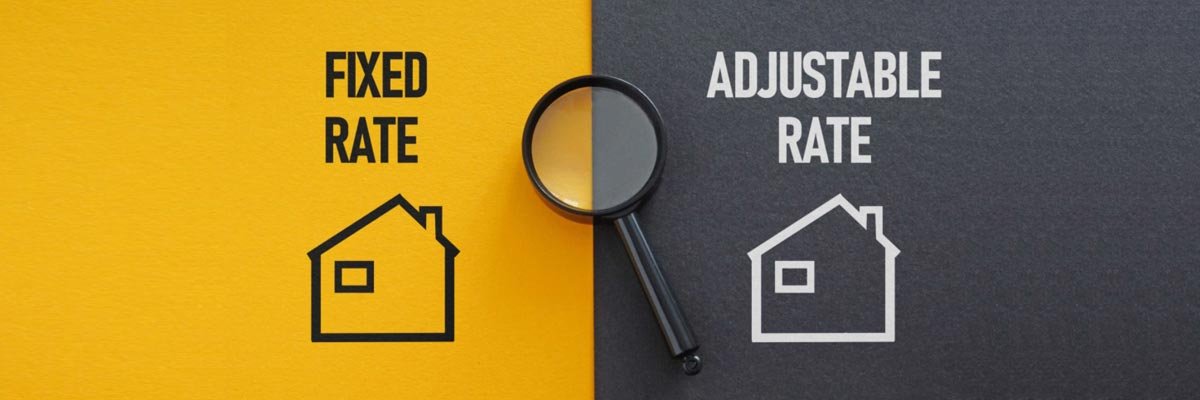
A fixed-rate mortgage maintains the same interest rate throughout your entire loan term, typically 15 or 30 years. Your monthly principal and interest payment remains constant, making budgeting predictable and straightforward.
How Fixed-Rate Mortgages Work
When you lock in a fixed rate, you’re protecting yourself from market fluctuations. If you secure a 6.5% rate on a 30-year mortgage, that rate stays at 6.5% whether market rates climb to 8% or drop to 4%. This stability has made fixed-rate mortgages the most popular choice among American homebuyers, with roughly 90% of borrowers choosing this option.
Advantages of Fixed-Rate Mortgages for New Jersey Buyers
Payment Predictability: In a state with high property taxes—New Jersey consistently ranks as having the nation’s highest property tax burden—knowing your mortgage payment won’t change provides crucial financial stability.
Long-Term Savings Potential: If interest rates rise after you close, you’ve essentially locked in savings for decades. Given New Jersey’s competitive housing market, this protection can be valuable.
Simplified Financial Planning: First-time homebuyers in Bergen County, Monmouth County, or anywhere in the state can budget confidently when their largest monthly expense remains unchanged.
Refinancing Options: You can always refinance to a lower rate if market conditions improve, giving you flexibility while maintaining your current stability.
Disadvantages to Consider
Fixed-rate mortgages typically start with higher interest rates than adjustable-rate options. If you’re stretching to afford a home in expensive markets like Hoboken or Princeton, that higher initial rate might impact your purchasing power. Additionally, if rates drop significantly, you’ll need to refinance to benefit—a process that involves closing costs and paperwork.
Understanding Adjustable-Rate Mortgages (ARMs)
An adjustable-rate mortgage offers a lower initial interest rate that changes periodically based on market conditions. The most common structure is a 5/1 ARM, where your rate stays fixed for five years, then adjusts annually.
How ARMs Work in Practice
ARMs feature an initial fixed period (typically 3, 5, 7, or 10 years) followed by adjustment periods. Your new rate is calculated using an index (like SOFR) plus a margin set by your lender. Most ARMs include caps limiting how much your rate can increase at each adjustment and over the loan’s lifetime.
For example, a 5/1 ARM may include a 2% periodic cap and a 5% lifetime cap. If your initial rate is 5.5%, it cannot exceed 7.5% at the first adjustment or 10.5% ever.
Benefits of Adjustable-Rate Mortgages
Lower Initial Rates: ARMs often start 0.5% to 1.5% lower than comparable fixed-rate mortgages. On a $400,000 loan, that could mean saving $200-$400 monthly during the initial period.
Increased Buying Power: The lower payment might qualify you for a larger loan, helpful when competing in New Jersey’s pricey housing markets.
Potential Rate Decreases: If market rates fall, your payment could decrease without refinancing.
Ideal for Short-Term Ownership: If you plan to sell or refinance before the adjustment period, you’ll benefit from the lower rate without facing increases.
Risks First-Time Homebuyers Should Know
The biggest concern with an ARM is payment uncertainty. After the fixed period ends, your payment could increase substantially—a significant risk in New Jersey where the cost of living is already high. If you’re budgeting tightly to cover your mortgage, property taxes, and other expenses, a payment jump could create financial strain.
Additionally, if home values decline or your financial situation changes, refinancing before the adjustment period might not be possible, leaving you stuck with a rising rate.
Which Mortgage Type Is Best for You?
The fixed vs adjustable-rate mortgage decision depends on your unique circumstances, financial goals, and market conditions.
Choose a Fixed-Rate Mortgage If You:
- Plan to stay in your home for seven or more years
- Value payment stability over potential savings
- Are buying in your forever home or long-term residence
- Have a tight monthly budget with little room for payment increases
- Feel uncomfortable with financial uncertainty
- Are purchasing during a low-rate environment
Consider an Adjustable-Rate Mortgage If You:
- Plan to sell or refinance within five to seven years
- Expect your income to increase significantly
- Are comfortable managing financial risk
- Want maximum buying power now
- Are purchasing a starter home with plans to upgrade
- Have substantial savings to cushion potential payment increases
New Jersey Market Considerations
New Jersey’s housing market presents unique factors that influence the fixed vs adjustable-rate mortgage choice. Property values in desirable areas like Summit, Montclair, and the shore communities have shown strong appreciation, which could support a refinancing strategy if you choose an ARM.
However, New Jersey’s property taxes—averaging over $9,000 annually—mean homeowners already face significant housing costs beyond their mortgage. Adding payment uncertainty through an ARM requires careful consideration of your complete financial picture.
The state’s diverse economy, anchored by pharmaceutical, financial services, and logistics industries, provides employment stability for many first-time buyers. If your career path suggests income growth, an ARM’s initial savings might fund home improvements or accelerated principal payments.
Making Your Decision
Start by honestly assessing your plans. Research shows most first-time homebuyers overestimate how long they’ll stay in their initial home. While you might envision your Maplewood colonial as your forever home, life circumstances—job changes, family growth, or lifestyle shifts—often lead to moves within seven to ten years.
Calculate the break-even point between a fixed-rate and ARM. Compare total payments during the ARM’s fixed period against a fixed-rate mortgage. If you’ll likely move or refinance before breaking even, an ARM might save money.
Stress-test your budget by calculating payments if your ARM adjusts to its maximum cap. Can you still afford your home, property taxes, insurance, and living expenses? If the answer is uncertain, a fixed-rate mortgage’s security may be worth the higher initial cost.
Talk to a New Jersey Mortgage Expert
Choosing between a fixed vs adjustable-rate mortgage is one of the most important financial decisions you’ll make as a first-time homebuyer. Every situation is unique, and what works for your colleague buying in Cherry Hill might not suit your purchase in Jersey City.
At Faster Mortgage, our New Jersey-based loan officers understand the local market and can model different scenarios based on your specific situation, timeline, and goals. We’ll help you understand current rates, market trends, and which loan structure positions you for long-term success.
Your first home should be a source of pride and security, not financial stress. Whether you choose the predictability of a fixed-rate mortgage or the initial savings of an ARM, make sure your decision aligns with both your current reality and future aspirations.
Ready to compare fixed vs adjustable-rate mortgages side by side? Speak with a Faster Mortgage New Jersey specialist and get a personalized rate strategy built around your first-home goals.
(Rates, terms, and eligibility may vary based on credit profile, market conditions, and lender guidelines.)